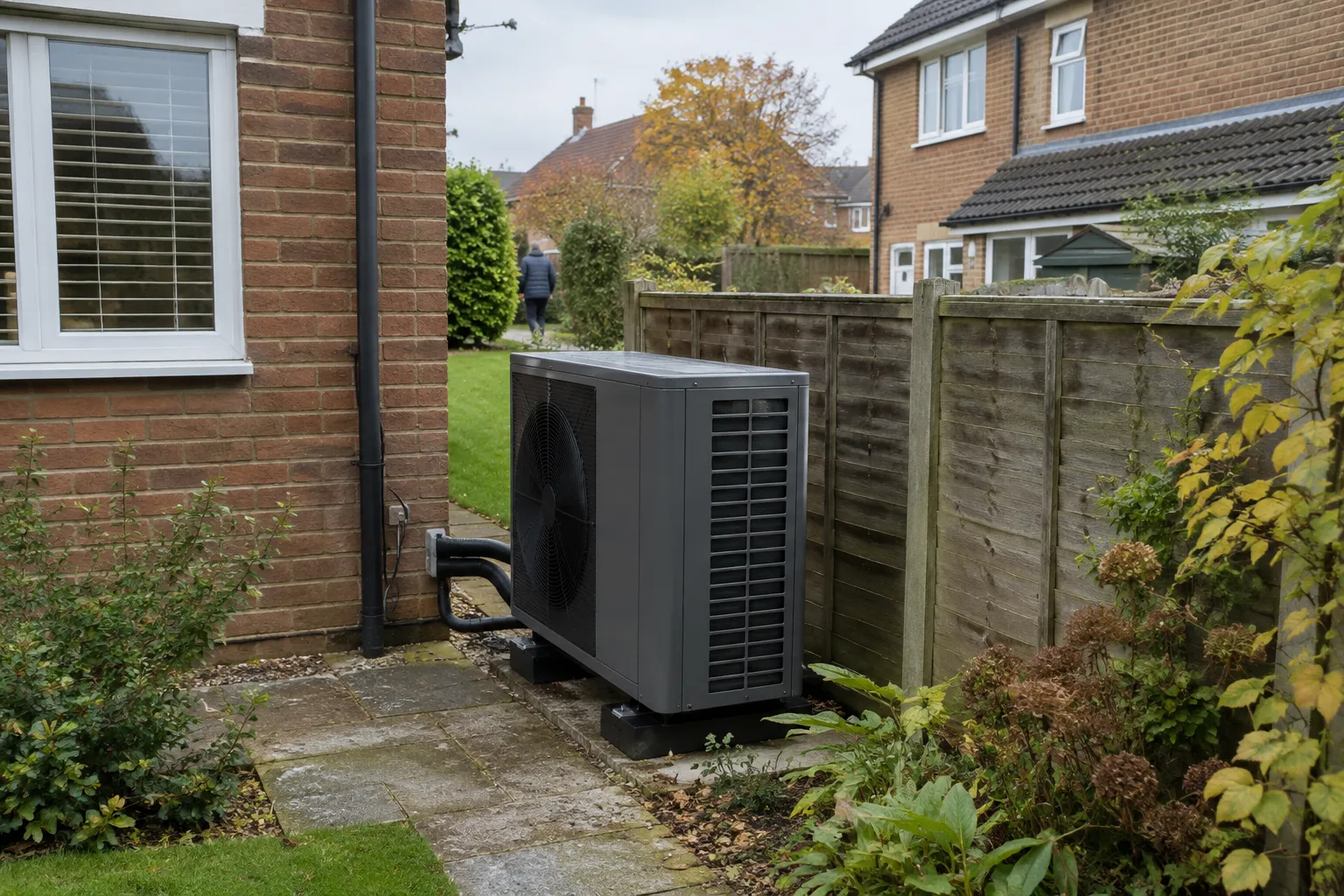
The main downsides of an air source heat pump (ASHP) are the higher upfront cost, the need for a proper heat loss survey and often larger radiators, some outdoor noise, and reduced performance if your home is poorly insulated. None of these rule a heat pump out, but they're worth weighing against the lower running costs and the government grant before you decide.
What are the downsides of air source heat pumps?
The biggest downside is upfront cost: even with the £7,500 government grant, a heat pump typically costs more to install than a straight gas boiler swap. Beyond price, a heat pump needs more from the building: good insulation, radiators (or underfloor heating) sized for its lower flow temperature, and outdoor space for the unit. It also heats more gradually than a gas boiler, running for longer at a lower output rather than in short, hot bursts.
None of this means a heat pump is a poor choice, most of these are things a proper survey and correct installation deal with, but they're real factors, not just marketing concerns to wave away.
Are air source heat pumps noisy?
Modern air source heat pumps typically run at 40 to 60 decibels measured close to the unit, broadly similar to a fridge humming or steady rainfall. In England, permitted development rules require the predicted noise at a neighbour's window to stay within the Microgeneration Certification Scheme's planning standard, so an installer has to check this before fitting the unit, not just pick a convenient spot.
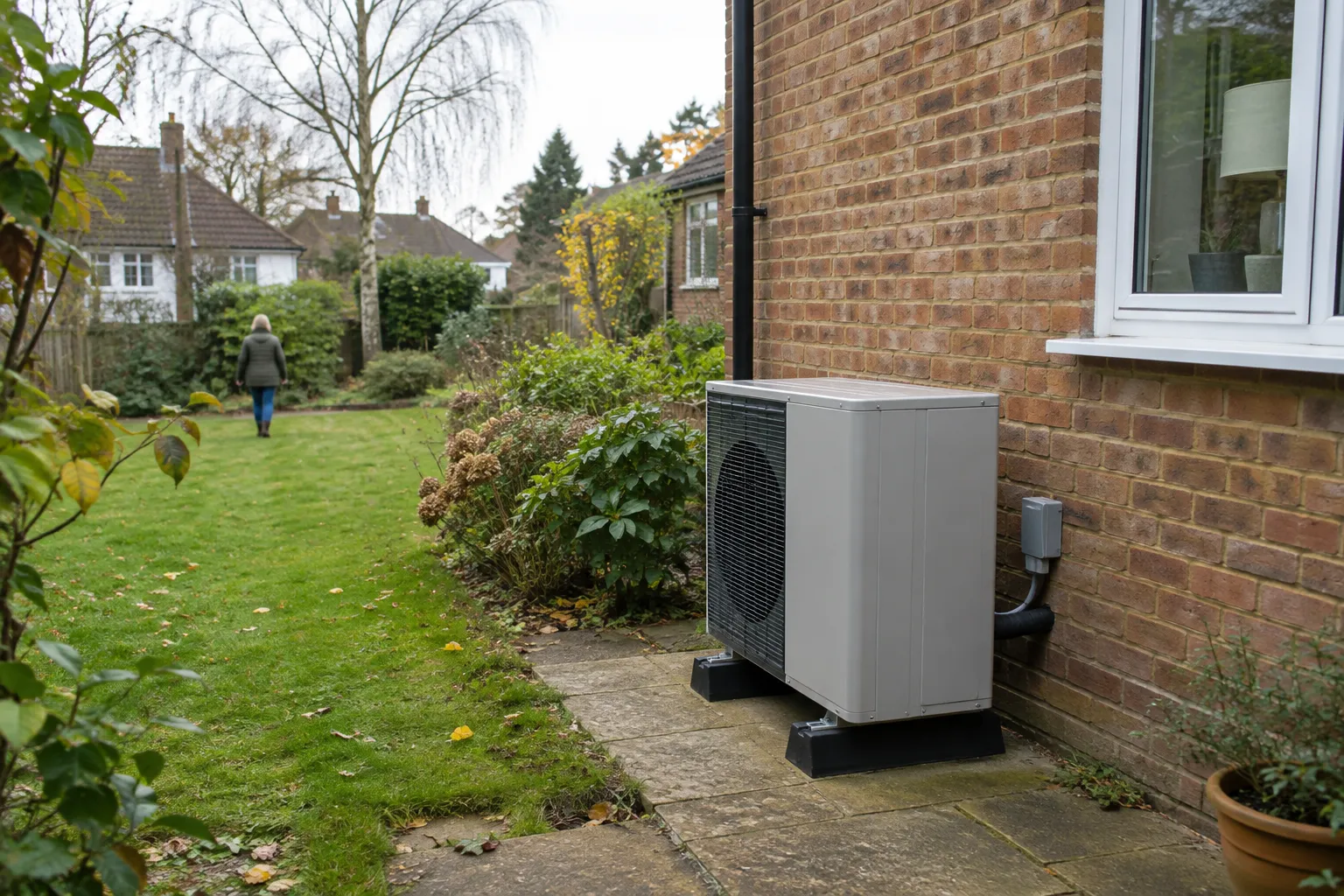
In practice this means the outdoor unit's exact position, and sometimes an acoustic enclosure, matters more in a terraced house with close neighbours than on a detached property with space to spare.
How does an air source heat pump compare to an oil boiler?
Against an oil boiler, a heat pump usually wins on running cost and on convenience, since there's no tank to refill or oil price to track, and it qualifies for the £7,500 grant if the home is currently on oil heating (plus an extra £1,500 until March 2027 for off-grid properties). The downside is the same as against gas: more upfront cost, and a heat pump needs the home's insulation and radiators to suit its lower flow temperature.
Questions people ask
What are the pros and cons of an air source heat pump overall?
The main pros are lower running costs than gas or oil in a reasonably insulated home, no flue or tank, lower carbon emissions, and eligibility for the £7,500 government grant. The main cons are higher upfront cost, some outdoor noise, the need for a proper heat loss survey, and often larger radiators. Most homes can make it work; the question is usually cost and readiness, not whether the technology works.
Do air source heat pumps work in cold weather?
Yes. Modern air source heat pumps are designed to keep working in UK winter temperatures, including below freezing, though their efficiency does drop a little as it gets colder outside. A correctly sized system, based on a proper heat loss calculation rather than a guess, is what keeps a home warm on the coldest days, not the outdoor temperature alone.
Will I need planning permission for an air source heat pump?
Most domestic air source heat pump installations in England count as permitted development and don't need planning permission, as long as the unit meets size limits and passes the noise assessment. Listed buildings and some conservation area positions are exceptions. Your installer or the Planning Portal can confirm whether your specific property needs an application.
Can an air source heat pump cool my home as well as heat it?
Some air source heat pumps can run in reverse to provide cooling, similar to air conditioning, but not all models or installations are set up for this. If cooling matters to you, say so when you're getting quotes, since it affects which system and installation is right for your home.
Sources
Last updated